The Agentic Revolution: AI Video Production Tutorial 2026 (Gemini 2.0 Edition)
Welcome to the era of Project Astra and Gemini 2.0. If 2024 was about “prompting,” 2026 is about “delegating.” With the release of Gemini 2.0, we’ve moved past simple video generators into the world of Agentic Video Production.
In this updated AI Video Production Tutorial 2026, we aren’t just stitching clips together. We are using a digital film crew that remembers your previous projects, plans your shots, and even navigates the web to find references.
1. The Brain: Using Gemini 2.0 as your Showrunner
Forget writing every single prompt by hand. With Gemini 2.0’s Long-Term Memory and Deep Research capabilities, you can now feed it a 50-page novel, and it will remember character descriptions across an entire 10-episode series.
The Workflow: Use Gemini 2.0 Flash to storyboard. Ask it: “Based on my previous ‘Neon Casablanca’ project, generate 10 Kling AI prompts for Chapter 2, ensuring the lighting matches the finale of Chapter 1.”
The Edge: Because Gemini 2.0 has 35% better visual comprehension, you can upload a rough sketch or a photo of your backyard, and it will translate that spatial reasoning into a professional prompt for your video generator.
2. The Muscle: Generating Clips with Kling & Veo 3
While Kling AI handles the character physics, Google’s own Veo 3 (now fully integrated with Gemini 2.0) is the king of Multimodal Synergy.
Cinematic Realism: In 2026, use Veo 3 for shots that require complex text-to-video instructions. Gemini 2.0 acts as the “bridge,” translating your natural language into the high-latency, optimized code the video models need.
Fixing Glitches: If Kling gives you a “hallucination” (like a six-fingered detective), don’t just regenerate. Use Project Mariner (the browser agent) to find a reference image of a hand in that specific pose and feed it back into the Image-to-Video engine.
3. The Voice: Eleven v3 and Real-Time Reasoning
With the 20% improvement in speech recognition and steerable text-to-speech mentioned in the news today, audio is no longer a static file.
Dynamic Voiceovers: Using Gemini 2.0’s low-latency output, you can “talk” to your character’s voice profile. Tell the ElevenLabs API: “Say this line again, but with a bit more sarcasm and a slight Moroccan accent.” The AI understands the cultural nuance of the accent better than ever before.
Multilingual Mastery: Since the 650 million monthly users of the Gemini app are global, your video should be too. Gemini 2.0 can live-translate your script while maintaining the emotional prosody of the original performance.
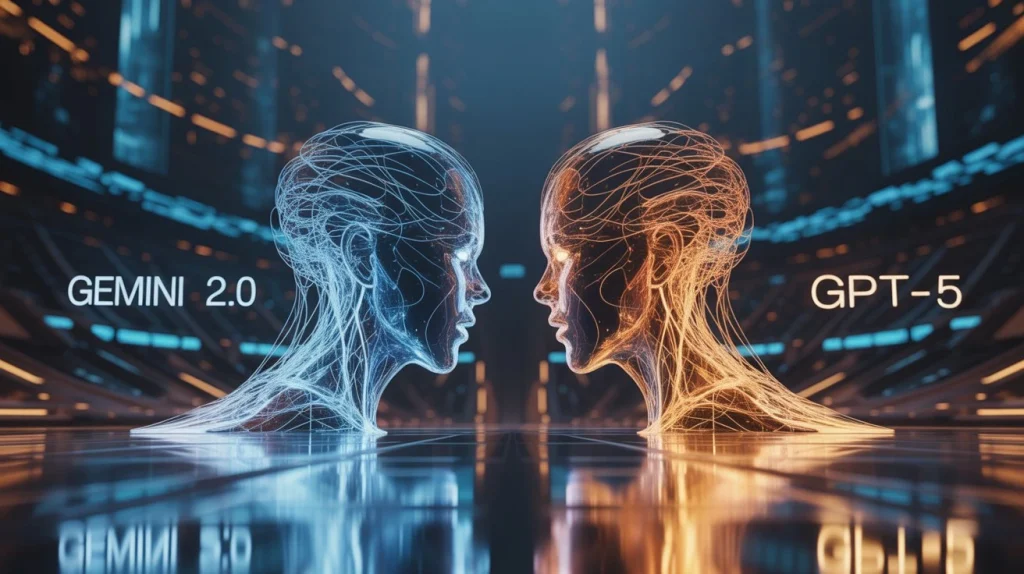
4. The Competition: Gemini 2.0 vs. GPT-5
As we look at today’s headlines, the rivalry is at its peak.
Why use Gemini for Video? While GPT-5 might claim parity in coding, Gemini 2.0’s native multimodal reasoning makes it a “visual-first” model. It “sees” the video clips you’ve generated and can critique them: “The shadows in clip #4 are inconsistent with the sunset in clip #3.”
5. The Final Polish: Agentic Editing
In 2026, “Editing” is becoming “Directing.”
Jules (Coding Agent): You can now use Jules to write custom scripts for DaVinci Resolve or Premiere Pro, automating the boring stuff like syncing audio or color-matching 100 clips at once.
Spatial Reasoning: Tools like Project Astra allow you to point your camera at your editing timeline and say, “Make this look more like a Christopher Nolan film,” and the AI will adjust the contrast and pacing in real-time.
💡 The 2026 Golden Rule: Intent over Intelligence
The news today calls this the “AGI Revolution,” but for you, the creator, it’s an Empowerment Revolution. The AI can plan, remember, and execute, but it cannot feel.
Your Secret Weapon: Use Gemini 2.0’s “Deep Research” to find obscure historical facts or unique cultural “Easter eggs” to put in your film. It’s these human touches that will make your content stand out in a sea of AI-generated clips, ensuring your AdSense revenue stays high and your audience stays loyal.